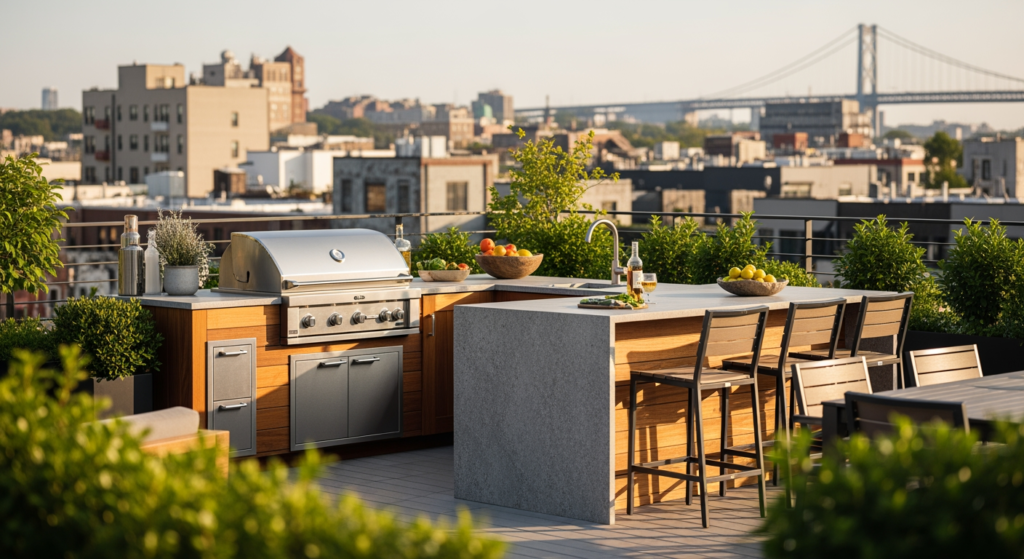
I love the idea of making the most of small footprints by taking living space up a level, which is why a rooftop outdoor kitchen in NJ is one of the smartest upgrades you can make to a city home or suburban house. With more New Jersey households valuing outdoor living and multifunctional spaces—as shown by recent U.S. Census trends around home improvements and outdoor amenities—a rooftop kitchen transforms unused roof space into a social hub that works year-round when designed well.
Why a rooftop outdoor kitchen makes sense in New Jersey
Rooftop kitchens are no longer just for penthouses. In NJ towns from Jersey City to Montclair, homeowners are reclaiming rooftops for entertaining, dining, and cooking. A rooftop outdoor kitchen increases usable square footage without expanding your foundation, often adding stronger resale value than a traditional patio. You get panoramic views, privacy that many ground-level spaces lack, and the ability to host year-round with the right cooking and heating systems.
Top benefits for local homeowners
Here’s what many NJ homeowners tell me they gain by investing in a rooftop outdoor kitchen: better views (think waterfront skylines or leafy neighborhoods), stronger home value per square foot, and a unique, functional space for gatherings. Rooftop kitchens can also help you make efficient use of backyards that are shaded or too small for a full outdoor setup.
How to plan your rooftop kitchen the right way
Good planning makes the difference between a messy retrofit and a rooftop that functions like a true room. Start by looking at load capacity, access, wind exposure, and municipal rules. In towns across Bergen County and Hudson County, building departments have specific requirements for rooftop structures, so early conversations with the local building office and a structural engineer can save time and money.
Essential planning steps
- Evaluate structural capacity with a licensed structural engineer to determine reinforcement needs.
- Confirm local zoning and rooftop use rules with your municipal building department before finalizing the design.
- Plan safe and convenient access via stairs or an elevator, plus consider railings and egress requirements.
- Decide how you’ll handle utilities: gas lines, electrical feeds, and water/drainage options.
Design ideas that work well in New Jersey neighborhoods
Rooftop kitchens can fit many styles, from ultra-modern to classic farmhouse. In dense cities like Hoboken and Jersey City, compact linear kitchens with built-in grills and counter seating maximize flow. In suburban towns like Montclair or Princeton, you can add more seating, planters, and pergolas for shade and privacy. Consider materials that withstand coastal humidity if you’re near the waterfront, and choose finishes that are low-maintenance for winter months.
Trending design elements
Several trends are shaping rooftop outdoor kitchens right now. Porcelain countertops and stainless steel cabinetry are popular because they resist staining and weathering. Modular, prefabricated kitchen modules simplify installation and can be swapped or upgraded. Smart appliances—grills that connect to apps or integrated gas and induction combos—bring indoor convenience outside. Green roofs and native plant planters are growing in popularity as homeowners look to improve insulation and stormwater management.
Materials and appliances to choose
Pick materials for durability and ease of care, especially with New Jersey winters and occasional coastal air to consider. Stainless steel remains the top pick for cabinets and appliances for its rust resistance. Porcelain slab counters look great and handle heat and spills. Composite decking or porcelain pavers are excellent for rooftop flooring because they’re light, durable, and low-maintenance.
Appliance guide
Consider the following when choosing appliances:
- Built-in gas grill with proper ventilation and a professional gas hook-up.
- Refrigerator drawer or under-counter fridge for easy access to cold drinks and ingredients.
- Dedicated sink with drainage that meets local plumbing codes.
- Outdoor-rated pizza oven or wood-fired grill if you want a standout cooking feature.
Weatherproofing and year-round use
New Jersey weather swings from humid summers to cold, snowy winters. To make a rooftop kitchen function for more of the year, integrate weatherproof features: cover structures like pergolas with retractable canopies, add infrared heaters and a gas fireplace for chilly evenings, and use screens or glass windbreaks to soften high winds. Proper drainage and waterproof membranes are non-negotiable to protect the structure below.
Winter-ready tips
Design with winter in mind so your rooftop remains useful beyond summer. Use heated seating pads or a gas-powered outdoor heater for temperature control. Install cabinets with weather seals, and consider removable cushions and storage options for soft goods. Plan for easy seasonal maintenance so snow removal won’t damage the appliance surfaces or the rooftop membrane.
Budgeting: cost ranges and where to invest
Costs vary widely depending on size, materials, and complexity. A basic rooftop setup with a built-in grill, small counter, and seating can start in the low five figures, while a fully equipped rooftop kitchen with a pergola, pizza oven, refrigeration, and reinforced structure can run significantly higher. Allocate budget for structural engineering and permits early—those line items can add up, but skipping them risks costly rework.
Where to prioritize spending
Focus spending on:
- Structural reinforcement and waterproofing to protect your home.
- Quality appliances and durable finishes that will last through seasons.
- Lighting and heating so the space is usable in evenings and cooler months.
Permits, safety, and working with professionals
Permits are a major part of rooftop projects in NJ, and neighborhood rules vary. Always work with a licensed contractor and verify that subcontractors are insured. A structural engineer must approve load modifications, and licensed electricians and plumbers should handle gas, water, and electrical connections. Safety features like guardrails, non-slip flooring, and proper egress routes are essential.
Questions to ask potential contractors
When interviewing professionals, ask about their experience with rooftop builds in your municipality, examples of completed rooftop kitchens, and how they manage permits and inspections. Request a project schedule and a contingency plan for weather delays.
Practical maintenance and longevity tips
A little care keeps your rooftop kitchen looking new and functioning reliably. Seasonal checks for seals, grease management near the drain, and professional inspections of gas lines and electrical components are smart habits. Regular cleaning and winterizing appliances will extend life spans and reduce replacement costs over time.
Case studies and neighborhood considerations
I’ve seen rooftop transformations across urban and suburban NJ where the same principles create vastly different outcomes. In dense pockets near the Hudson River, space-conscious designs with counter seating and wind screens dominate. In leafy suburban neighborhoods, rooftop kitchens become green retreats with planters, raised garden beds, and pergolas. Tailoring your rooftop to your neighborhood’s style and microclimate helps the space feel integrated and livable.
Action plan to get started
Ready to move from idea to action? Here’s a simple timeline that keeps the project manageable and focused.
- Step 1: Gather photos of the roof, note access points, and collect any existing building plans. Schedule a structural assessment.
- Step 2: Meet with a designer to pin down layout options and appliance selections. Ask for a concept that includes storage, seating, and flow.
- Step 3: Submit permit applications and secure contractors for structural reinforcement, rooftop sealing, and appliance installation.
- Step 4: Oversee construction with clear milestones and plan seasonal finishing touches like cushions and potted plants once the build is complete.
Common pitfalls and how to avoid them
Missteps often come from skipping the engineering review, under-budgeting for reinforcement, or choosing finishes that can’t handle exposure. Avoid surprises by getting quotes for structural work early, specifying weather-rated materials, and planning for proper utility routing. Communication with neighbors about construction timing and noise can smooth permitting and community relations.
Why designers matter for rooftop kitchens
A skilled landscape designer or rooftop specialist blends structural know-how with hospitality-minded design. They balance technical requirements like roof load limits and drainage with design elements that make the kitchen comfortable and beautiful. If you want a space that feels like an extension of your home rather than a patchwork project, professional design is the best investment.
Final thoughts and next steps
If a rooftop outdoor kitchen in NJ feels like the right next step, start with a structural assessment and a clear design brief for how you want to use the space. Whether your goal is weekend pizza parties, quiet morning coffee with a view, or a year-round dining area, the right plan will keep the project on budget and deliver lasting enjoyment. When you’re ready to discuss a custom rooftop plan that fits your site and lifestyle, Creative Design and Maintenance can help bring those ideas to life. Visit Creative Design and Maintenance to learn more and schedule a consultation.